`எல்லோரும் எம்.ஜி.ஆர், விஜய் ஆகிவிட முடியாது’ - தனுஷ், சிவகார்த்திகேயன் பற்றி து...
“Good science should end up in a glass of water!” - INTERVIEW WITH PROF. THALAPPIL PRADEEP
Admin
- an hour ago
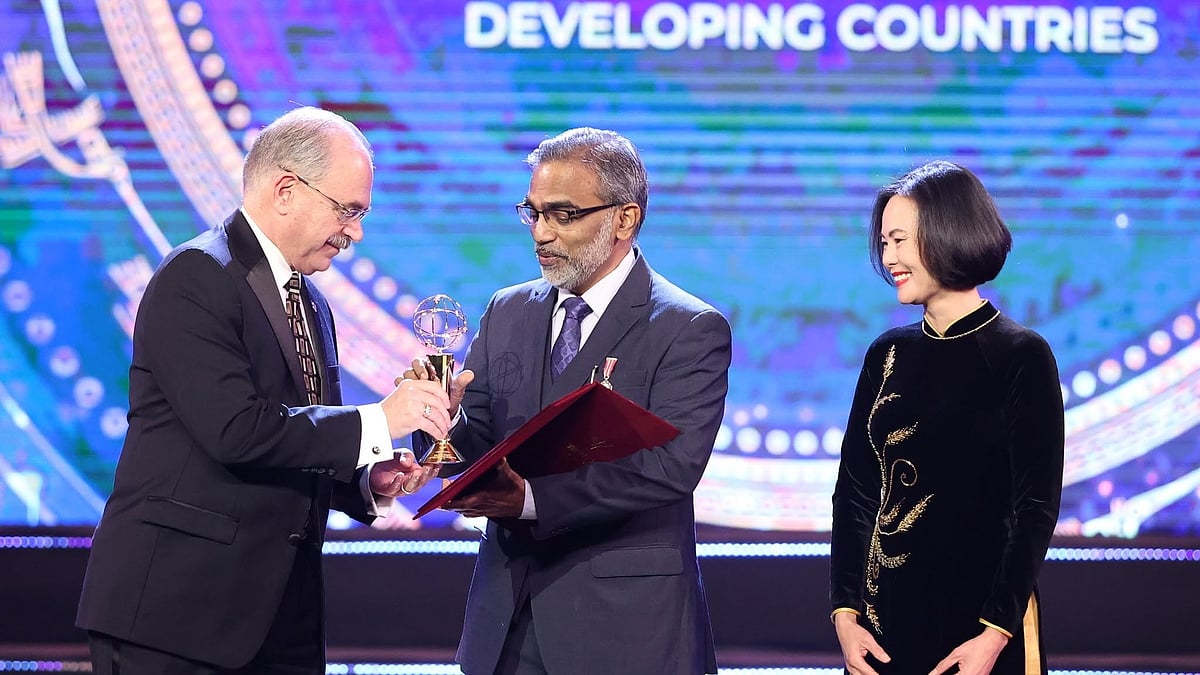
Prof. Thalappil Pradeep of IIT Madras has spent three decades turning nanoscience into something people can drink. His low-cost filters, which remove arsenic, pesticides and other contaminants from water, have reached millions of households across India. The recognition has followed: the VinFuture Special Prize in 2022 and now election as only the third Indian member of the European Academy of Engineering. He has also joined the VinFuture Prize Council, helping shape how the world recognises innovation. Here he speaks about science that reaches people, the road from lab to market, and what it takes to build technology for those who need it most.
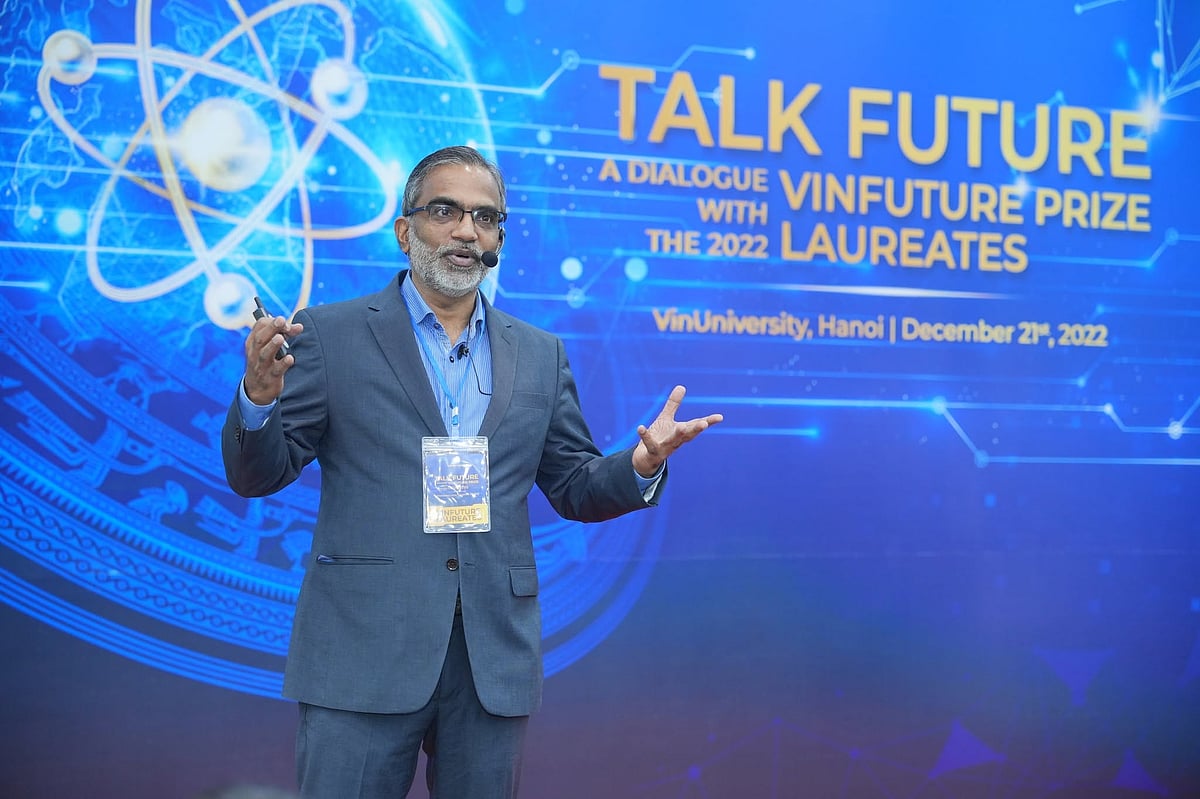
1. Four years after receiving the VinFuture Special Prize for Innovators from Developing Countries, you have now joined the VinFuture Prize Council. How does it feel to return to the VinFuture community in this new capacity?
To me, I came to the VinFuture family as a laureate. But now I return with a sense of responsibility.
On the one side, when you are a laureate, you are overjoyed by the Prize. But when you are part of the Prize Council, you have the pressure of responsibility. And that is a privilege. At the same time, it makes you humble.
You need to be democratic. You need to see that every nomination deserves the rightful attention. Every voice is heard, and every human being is rightfully heard.
That's a tremendous sense of responsibility.
2. Having experienced the Prize firsthand as a laureate, what motivated you to take on this new role, and what do you hope to contribute to the Council’s mission of identifying transformative scientific breakthroughs?
Science, to me, is always something that improves human life. In other words, if science does not contribute to improving human life, it has not fulfilled its complete promise.
So the ultimate measure of science is: what difference does it make to humanity?
The VinFuture Prize recognizes that. The human purpose behind an innovation, behind an idea, is what is being recognized. So, in my view, my role is to enhance that vision.
Discovery and societal impact are not two separate things. The Prize says that they are together. They are complementary.
My role is to take that vision forward. To me, this is the same ideal that I have always carried in my life: science is inseparable from its impact.
3. How has your perspective on scientific excellence and impact evolved since becoming a VinFuture laureate, and how might that influence the way you evaluate nominations from around the world?
Prof. Thalappil Pradeep:
Science, as I said previously, impact and scientific excellence are inseparable. They are essentially the same as far as a scientist is concerned. To me, it has always been inseparable.
But impact will be recognized only over years, sometimes over decades. It is not judged by publications alone. It is not judged by one specific implementation.
To me, the scale, the affordability, and the accessibility of innovation all have to be assessed to see its impact in the years ahead.
I also feel that transformative impact of science can happen from anywhere in the world. My own journey has shown me that innovations can come from anywhere in the world.
The impact is not necessarily publications alone. It comes over decades of effort. These are the perspectives I would like to use going forward as part of the Prize Council when I evaluate an innovation.
II. THE VINFUTURE EFFECT ON YOUR RESEARCH JOURNEY
4. Since receiving the VinFuture Prize in 2022, how has your research and innovation journey evolved? What are some of the most significant milestones your team has achieved over the past four years?
Prof. Thalappil Pradeep:
There are multiple things. First and foremost, I would say that our technologies have expanded further.
To me, I started seeing water not only as a clean water problem, but as a larger problem encompassing every aspect of society. I started looking at clean water for everyone, not only those who are affected in certain regions.
So I built what is called the People's Water Data Platform. This is a global enterprise to collect water data of the planet — how people use water, and what the quality and quantity of that water are. This creates open data accessible to the planet.
To me, that has been a great outcome of my work. This leads ultimately to something called digital water intelligence. To me, this is a way forward to ensure that the entire planet has clean water.
The framework that I have created is now expanding to different countries. If I may put it in one sentence, the first phase of our work focused on providing clean water. The next phase is about creating water intelligence.
I am on that path today.
I have also created the International Water Data Platform, which is a platform where anyone can come and build a water technology and implement it. We will help in that process. That has expanded further, and we now have over 40 different companies that have come up for water technologies.
There are also many fundamental discoveries that I have made in the past few years. One of the most important is the discovery of what water droplets can do in material synthesis. We have made very new and extremely impactful discoveries in the context of water droplets.
Increasingly, we are moving from technologies that solve isolated problems, such as arsenic, fluoride, or uranium, to platforms that empower communities.
So we are looking at water as a larger, holistic system in which multiple innovations can transform societies.
On the one side, it was clean water to address a few problems. Later, it became water intelligence. Now, it is looking at a platform of technologies that would empower societies.
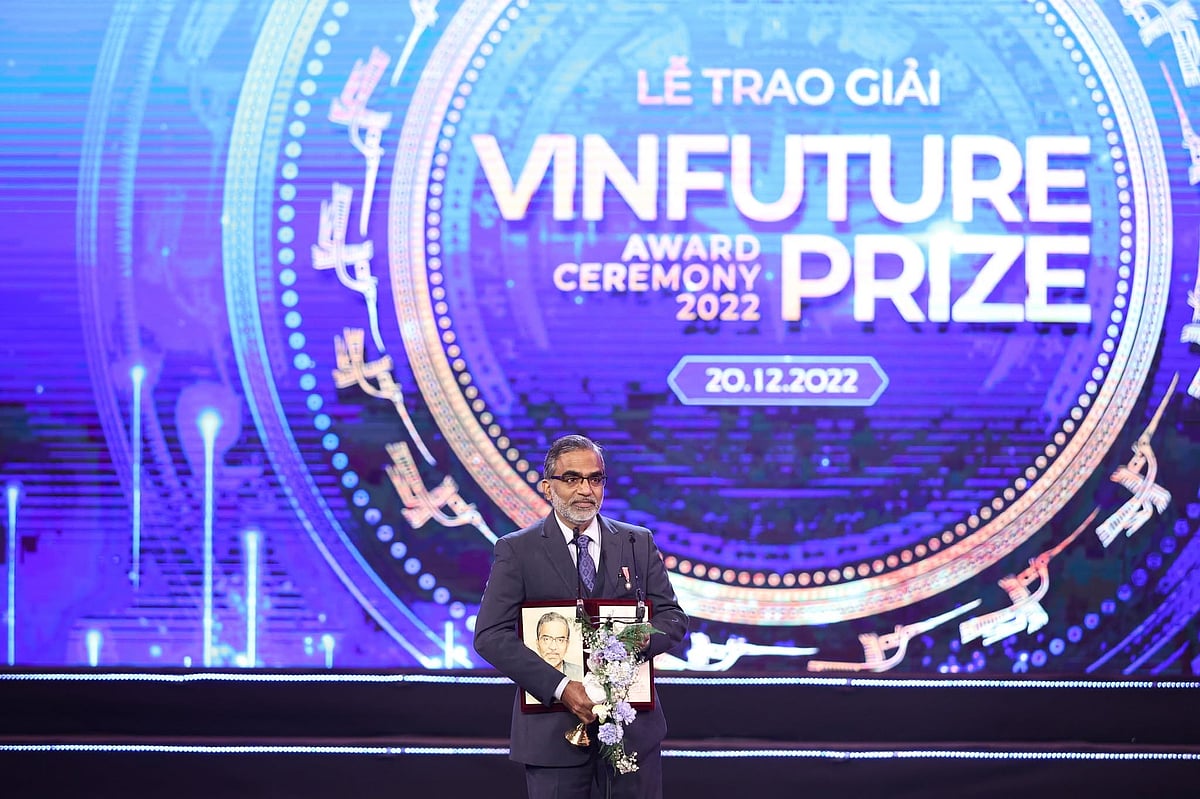
5. The technologies recognized by VinFuture have already improved access to clean water for millions of people. How have you expanded the reach and real-world impact of your work since receiving the Prize?
Prof. Thalappil Pradeep:
As I said, I have always wanted technologies to operate at scale. Therefore, I have expanded them further — to more people, more countries, more regions, and more contaminants.
I have expanded at scale. But at the same time, millions need these technologies even more. So more and more effort is happening.
I see that my own effort is smaller, while the world's requirements are larger.
Therefore, I have tried to help others build technologies. I have also tried to help them build companies. I have tried to get all these data together and make them freely available to people.
Using that data, those technologies, and those companies, we are reaching out to more and more people. And that reach, when it creates more data, creates new ideas as well.
So it is creating an innovation engine — creating more and more innovations, more and more solutions, more and more reach, and more and more wealth.
This is a cycle that is happening. What I would say is that a water innovation engine is what I am working on, and I continue to work on it.
6. Looking back, in what ways has the international recognition provided by VinFuture influenced your research collaborations, technology deployment efforts, or ability to attract new partnerships and talent?
Prof. Thalappil Pradeep:
VinFuture has certainly increased my international visibility. It has made it possible for others to dream about similar technologies.
It has helped me attract greater talent. It has helped me get greater collaborations. Now, it has become easier for me to expand technologies beyond the borders.
Developing countries have a lot to offer, and they have global relevance.
That is a message that the VinFuture Prize has made possible for me. The global relevance of these technologies has made it possible for others to realize that developing countries have something to contribute.
III. CHAMPIONING SCIENCE IN DEVELOPING COUNTRIES
7. Throughout your career, you have demonstrated that world-class scientific innovation can emerge from developing countries and address some of humanity’s most pressing challenges. What are the greatest opportunities you see today for researchers across the Global South?
Prof. Thalappil Pradeep:
If you look at today, the Global South is faced with even more challenges.
There are many challenges. The developing world continues to face greater challenges, and they can all be solved only by innovation.
The developing world is where people are young, more young, and they have greater ambition. And this can only be quenched, this can only be satisfied, with innovation.
The challenges — water, energy, agriculture, healthcare, circular economy, AI, or whatever it may be — hundreds of them — will be throwing newer questions at us, which will be solved by people, including those in the developing South.
They alone can solve the developing South's problems.
I also think that the solutions emerging from the Global South will address global challenges. Soon, they will be solutions that benefit the world.
So, to me, the developing world or developing South is developing solutions not only for itself, but also for the world.
From that canvas, the problems are too numerous to address. Because every problem — some of us used to say years ago — India is a collection of problems. You see, just walk around the streets, and you will see problems.
The same is the case with Vietnam. Vietnam is a collection of problems. Every problem exists in Vietnam. Every problem of the world exists in India.
Address those challenges, and you will be addressing problems of the world. You simply have to have an eye to see them.
So if I were to say the opportunities for the Global South, every opportunity is open.
You may say that necessity has always been humanity's greatest laboratory. That laboratory exists right in front of you in the developing world.
Right when you step out of your home, you have that laboratory. You simply have to observe it.
8. As a respected scientific leader in India and a prominent voice for researchers in developing countries, how do you hope to use your position on the VinFuture Prize Council to increase awareness of the Prize and encourage greater participation from scientists and innovators across these regions?
Prof. Thalappil Pradeep:
I would certainly make the Prize more open and known to people, encourage more nominations for innovators from the developing world, and raise awareness of this Prize through my professional networks, the academies that I represent, and the global knowledge societies.
I would highlight success stories from the Global South and mentor young people to work for that tomorrow.
Obviously, no solution is going to come in a short time. We need to mentor them and prepare them for something larger.
I would say the spirit of VinFuture is to say that innovations can happen anywhere.
Innovation without impact is incomplete.
I want this message to reach people.
9. Many groundbreaking innovations from developing countries remain underrecognized on the global stage. How can international prizes such as VinFuture help ensure that impactful work receives the visibility, support, and recognition it deserves?
Prof. Thalappil Pradeep:
Recognition, of course, creates visibility. Visibility attracts greater collaborations and greater resources. It's a cycle.
That recognition has to happen early so that those who get recognized, and those societies which participate, all have a longer runway for more and more innovations.
International prizes, of course, democratize recognition.
If you are recognizing early, recognizing the young, and recognizing people irrespective of regions, you are democratizing recognition.
To me, this is the way forward for international prizes — how they can make a greater impact.
Today, India is recognized with one Prize. There are many in India, of course. But there are many outside India.
Recognition has to travel across regions.
For that to happen, the recognition, the knowledge about recognition, the news about recognition, and the methodology used in identifying recognition — all of these have to reach across the world.
These require greater communication across societies.
I would say that all of these together help international prizes make an impact.
Having a Prize by itself will not change the world. We must recognize that the news about the Prize reaches everywhere. Everyone should be in a position to compete.
Every voice is seen. Every voice is heard. Every voice gets deserving attention.
It's a very involved job. This has to happen, in my view, for years together to create meaningful impact.
IV. BUILDING A STRONGER GLOBAL SOUTH SCIENTIFIC COMMUNITY
10. One of VinFuture’s unique strengths is its ability to connect scientists, innovators, and institutions across borders. How do you envision the Prize contributing to stronger scientific collaboration among developing countries in the years ahead?
Prof. Thalappil Pradeep:
Looking at me, water is a problem which has no borders. Developing societies have several common problems of that kind.
Collaboration is the only way to address those problems.
The VinFuture Prize, therefore, is a bridge connecting scientists across borders and problems.
Once this recognition is there, then with VinFuture's visibility, strengthening collaborations to address those grand challenges becomes natural. Collaborations become natural.
I would say that this is the way forward to address problems of the planet.
Shared problems create shared responsibilities.
If there is a mechanism to support those problems being researched upon, opportunities to support research on shared problems, we will have a better world.
Let me put this in one word: opportunities to address shared problems will be the way forward for us to build a better planet.
11. India and Vietnam are both emerging centers of innovation with growing scientific capabilities. What opportunities do you see for deeper collaboration between researchers, universities, and innovation ecosystems in our two countries?
Prof. Thalappil Pradeep:
Look at the strengths. The strengths of these two countries, first and foremost, are young talent. Secondly, strong universities.
Both are recognizing knowledge as the transformative power of these societies. And both have very strong innovation ecosystems. We both have developmental priorities.
So if you look at it from that framework, what should we address?
We should be addressing our common problems: water technologies, circular economy, rare earths, sustainable agriculture, green construction, sensors, green energy, urban mining, circularity, sustainable Vietnam, circular Vietnam — all of these are similar problems.
Circular India and circular Vietnam are similar problems.
So I would say India and Vietnam are not merely emerging economies; they are emerging knowledge societies.
They will address their problems with their young talent if we are in a position to motivate them properly.
So the problems are similar, the aspirations are similar, and that is our greatest strength between these two societies.
12. Looking ahead, are there specific initiatives, partnerships, or networks that you would like to champion through your role on the VinFuture Prize Council to strengthen South-South scientific cooperation and foster greater collaboration between developing countries and Vietnam?
Prof. Thalappil Pradeep:
Science has always been humanity's most powerful common language, and both our societies will address our challenges.
The world as a whole will address those challenges only through science. Science has no borders, and it is beyond races and all that.
What are those grand challenges that VinFuture can address?
I work in the area of materials, water, and such things. To me, if I were to put one large problem that we can address, it is what I said previously as circular Vietnam.
But circular Vietnam is circular India, circular world.
Can we address this?
Now, this has many, many sub-dimensions. All of these translate to energy, water, climate, and all those things.
To me, today, everyone has a role to play in this, and there is enough possibility for translation, technology development, incubation, and all of these.
So if you were to ask me one grand challenge that VinFuture can address, it is circular society.
For me and you living in these countries with lots of aspirations, we are changing nature tremendously.
Is there a way that what you do is sustainable?
That's a question not only for me or humans, but it is from the One Health perspective. Every being has its own right to be living here.
So this is something that we in the developing world can demonstrate to the world.
I would say, hats off to VinFuture's founders.
Recognition that science, when it impacts society, needs to be recognized. It's a thought that is coming from the developing world, and with a Prize of this kind, hats off to them.
And if that vision can be translated to discovering new solutions, finding new solutions which impact society, that is an even greater vision.
You recognize those discoveries — that is one thing. But you also support the creation of new solutions which will eventually transform the world — that is an even greater ambition and a greater aspiration.